
Project stories · 12 October 2026 · 5 min read
Data Power Tools: A Trade Counter That Works
A good trade counter is planned around staff, stock, equipment and customer conversations. Our Data Power Tools counter joinery shows how a defined service point, a distinctive frontage and a carefully detailed worktop can work together in a busy tool shop.
A trade counter is not a reception desk with a till added. Customers arrive with questions, part numbers and tools to compare. Staff need somewhere to advise, check stock and take an order. Our Data Power Tools project puts those everyday demands at the centre of the story.
A counter in its real working environment
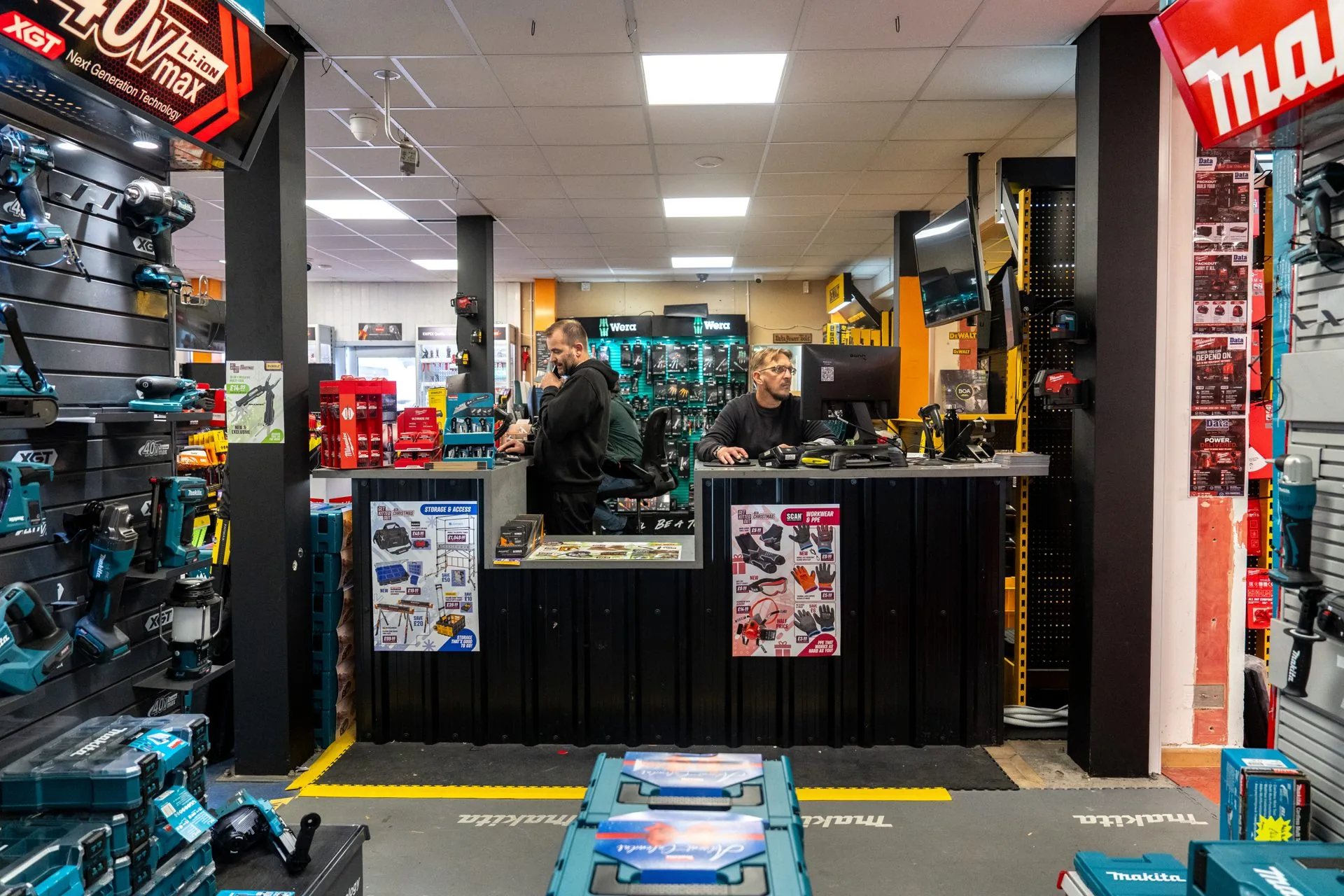
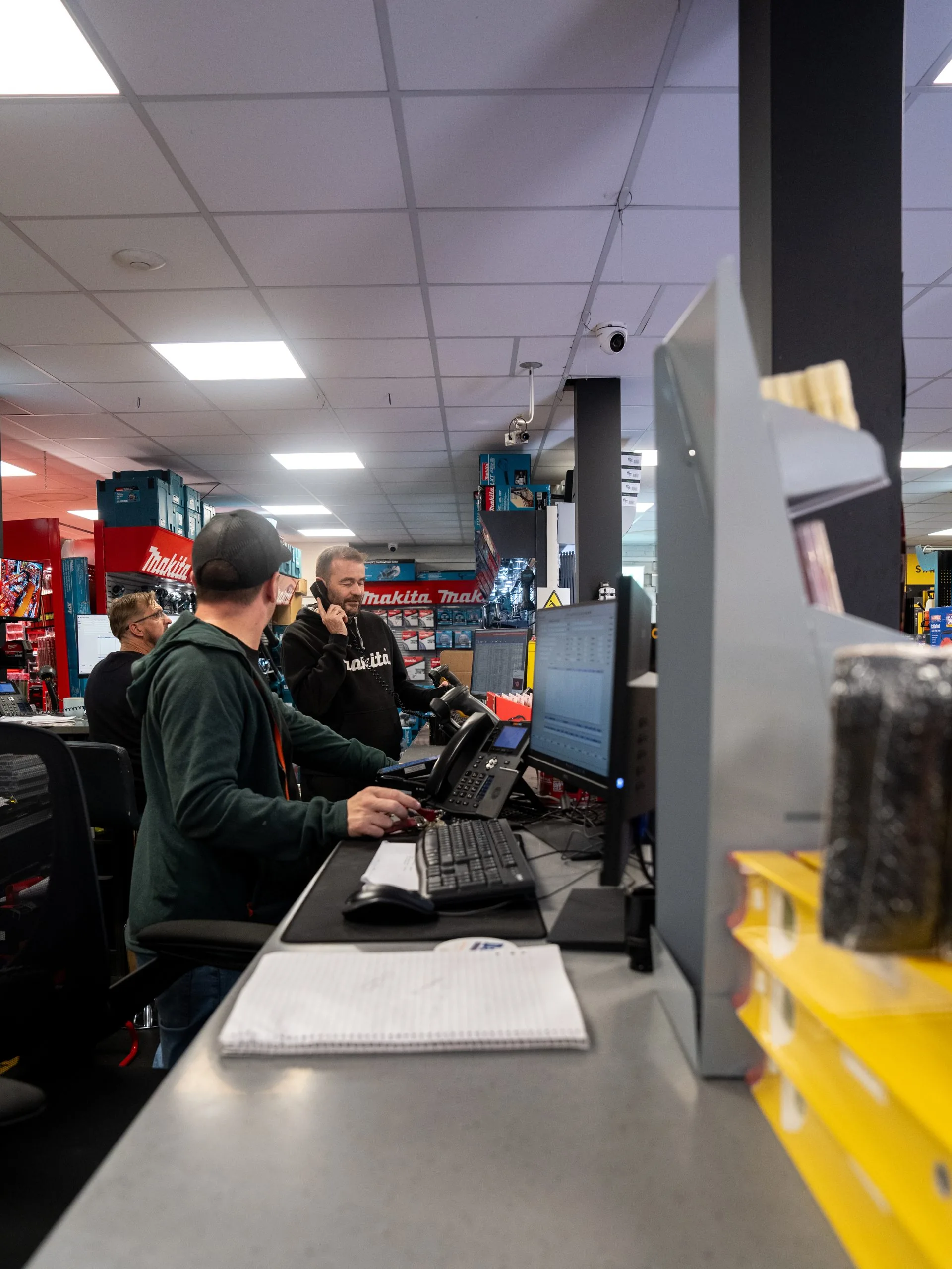
The photographer’s images show the counter in use, with screens, paperwork and tools around it. That context matters. A fixture can look excellent in an empty room and still be awkward once the equipment and the people arrive.
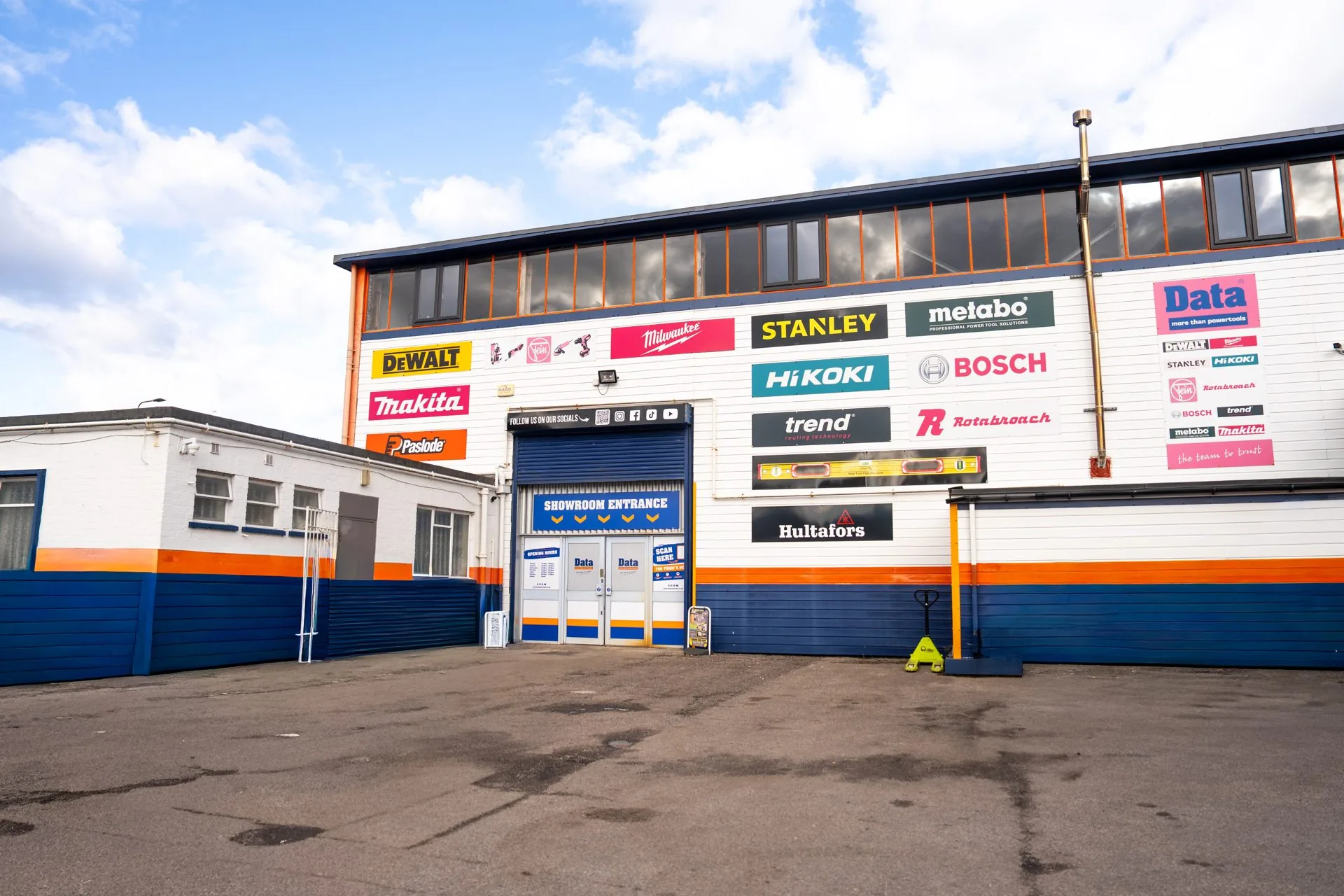
Here, the black fluted counter frontage creates a clear service point within a densely stocked tool shop. The speckled worktop gives the piece a contrasting finish, while the wider photographs show how it sits alongside the product displays and the existing Data branding.
Start with the service, not the shape
Before choosing a counter colour, map a typical order from the moment the customer approaches to the point they leave. Where does the product go? Where can staff look up a specification? Can another customer be served without interrupting that conversation?
Those questions turn a furniture brief into a useful piece of shopfitting. They also help identify what should stay on the worktop and what needs a home underneath.
- List tills, screens, card readers and printers before drawings are signed off.
- Allow a clear area for products and customer enquiries.
- Plan staff access, storage and cable routes together.
- Check accessible service positions and circulation against the actual layout.
Let the detail do the branding
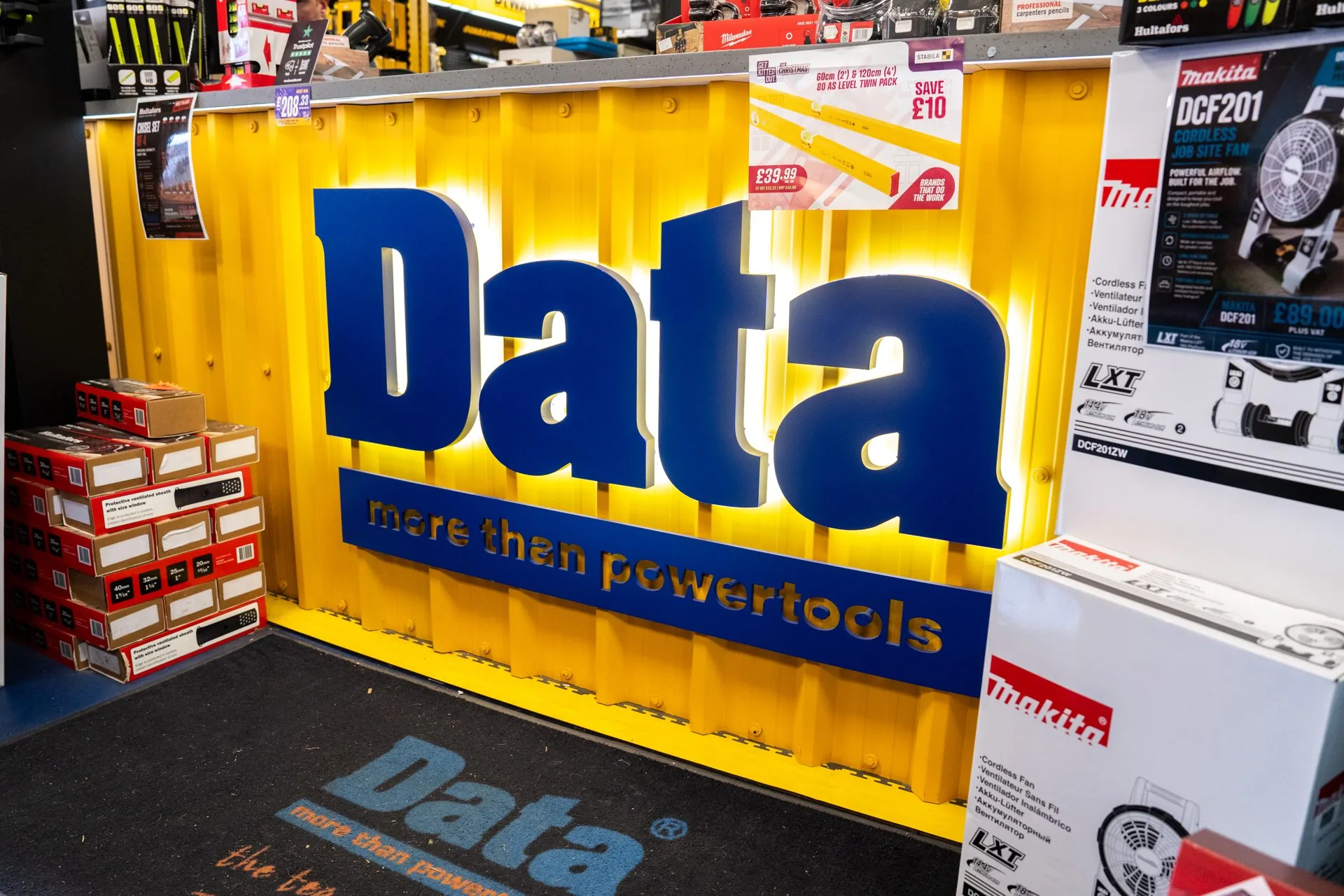
Not every counter needs an oversized logo. At Data Power Tools, the photographs show two distinct visual cues: the black fluted joinery and the familiar yellow Data branding elsewhere in the shop. Each has a role, and the counter does not need to compete with every product display.
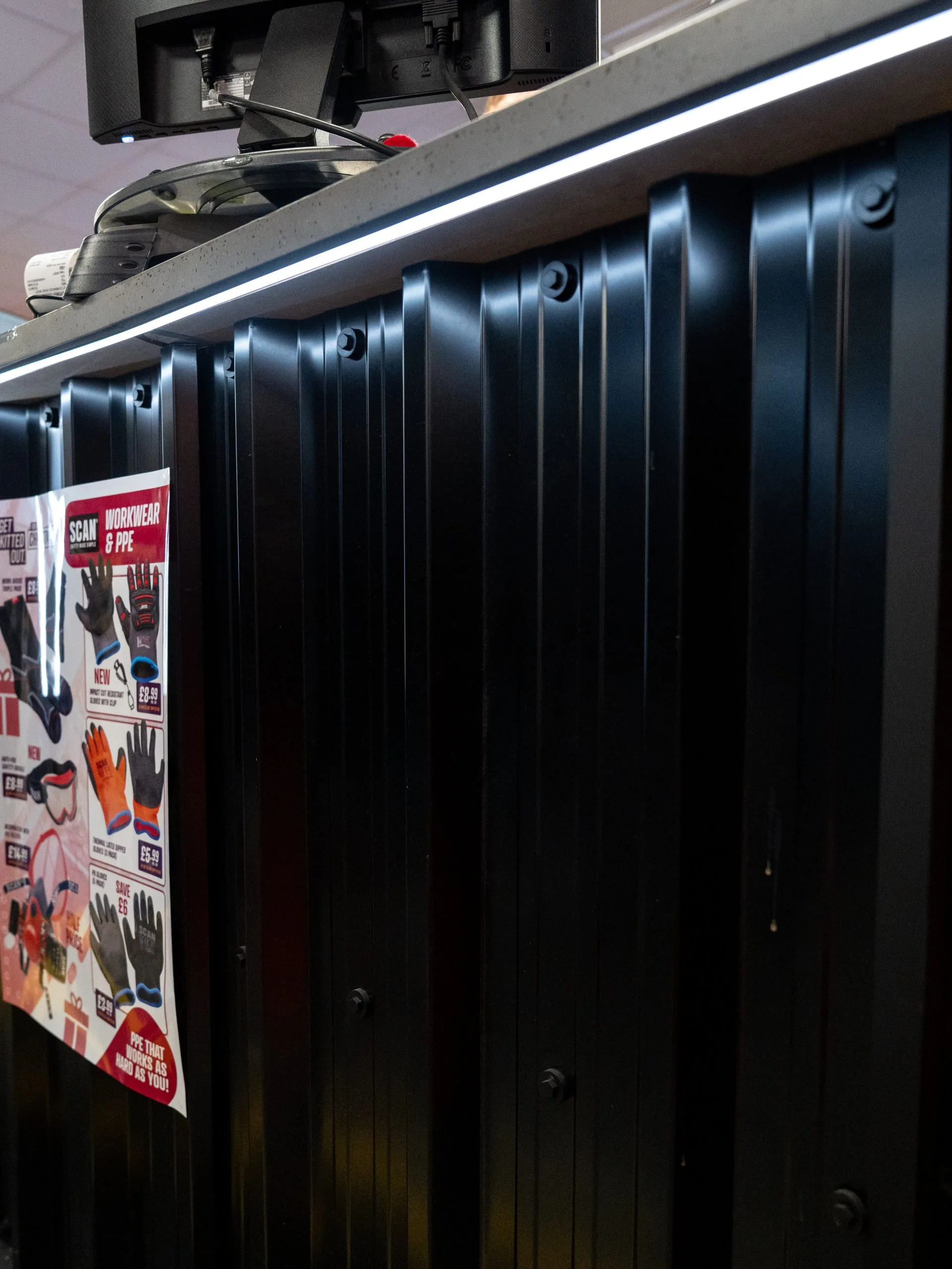
The close-up images are useful for anyone planning a retail counter. They show the front profile, the worktop edge and the contrast between materials, rather than relying on a single distant photograph.
Choose finishes for the trade
A tool shop is a different environment from a boutique or a cafe. Think about what will be placed on the counter, how often it is cleaned and where knocks are likely. Material names alone will not tell you whether a finish is suitable.
We discuss the wear points, edge details and maintenance expectations before recommending a specification. The photographed speckled worktop is shown here as a finish reference, not a claim about a particular material brand.

A focused piece of joinery can make a difference
A shop does not always need a complete strip-out to improve how it feels. A well-planned counter can give customers a more obvious place to go and give the team a clearer working area. The right scope depends on what is already working, not on how much can be replaced.
For an initial conversation, send us photographs of the existing counter, a rough plan and the equipment list. Tell us what frustrates your staff now. We can then talk through the practical options and price the agreed scope without pretending every shop needs the same solution.
Project gallery
Planning a trade counter or refreshing a tool shop? Send us a photo, your equipment list and what needs to work better. We will help you define the right scope.
Written by
Oli Williams, Founder and Managing Director
RAF veteran who founded OLLYWOOD in 2019, with 20 plus years of project management experience in shopfitting and retail fit-out.
Keep reading
Project stories
Gelert Post Production Studio: From Shell to Studio
Read →
Budgets
What Does a Retail Fit-Out Cost in the UK?
Read →
Choosing a contractor
How to Choose a Shopfitter: 10 Questions to Ask
Read →
Process
Landlord Approval for Retail Fit-Outs: A Practical Guide
Read →
Choosing a contractor
What Is a Shopfitter? The Difference Between Shopfitter, Builder and Interior Designer
Read →
Trends
Retail Shopfitting Trends for 2026
Read →
Sustainability
Sustainable Shopfitting: How to Build Retail That Lasts
Read →
Budgets
Office Fit-Out Costs: What You Pay Per Square Foot
Read →
Materials
Corian and Solid Surface Worktops: Costs, Care and Where They Win
Read →Process
What Is a Retail Kiosk or RMU? Costs, Lead Times and Mall Rules
Read →Budgets
Shop Fitting Costs: What You Pay Per Square Metre
Read →
Kiosks
Opening a Kiosk in a Shopping Centre: Rules, Approvals and Lead Times
Read →
Materials
Bespoke Joinery or Off-the-Shelf: What Retail Should Actually Buy
Read →
Budgets
Cafe Fit-Out Cost: Real 2026 Budgets
Read →
Budgets
Cat A vs Cat B Fit-Out: Costs and Differences
Read →
Design
Shop Counter Design: Sizes, Materials and Costs
Read →